
REGENETEN bioinductive implant outcomes show significantly faster recovery times in patients with partial-thickness rotator cuff tears, according to new randomised controlled trial data. The findings highlight potential improvements in post-operative recovery and tendon healing compared to traditional repair methods.
Study shows faster return to daily activities
Smith+Nephew reported results from a randomised controlled trial evaluating the REGENETEN bioinductive implant. The study compared the implant with traditional suture anchor repair techniques.
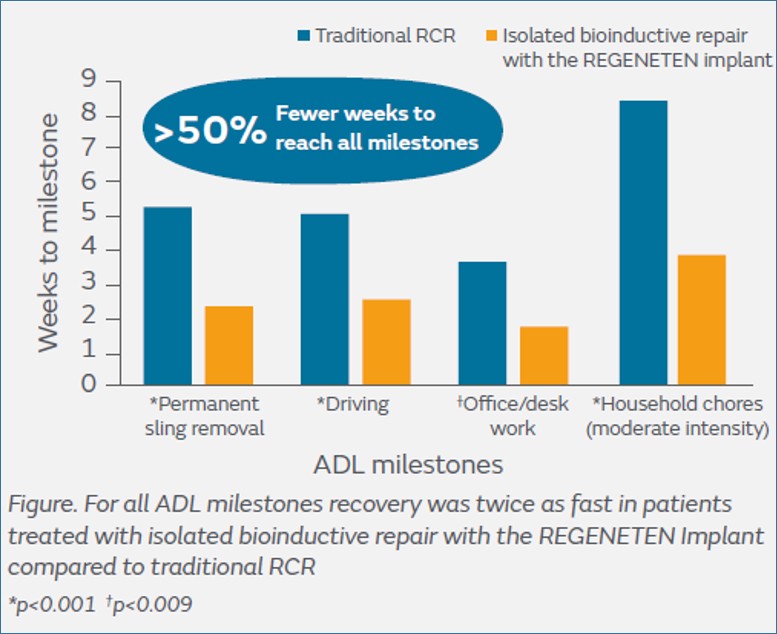
Results indicate that patients treated with the implant reached key recovery milestones in approximately half the time. These milestones included return to driving, office work and moderate household activities.
Improved early recovery and quality of life
The study found that patients using the implant experienced improved functional independence during early recovery. In addition, quality of life scores were higher at six weeks and three months post-surgery.
Meanwhile, tendon healing rates at one year were reported to be comparable to traditional repair approaches. This suggests that faster recovery did not compromise longer-term clinical outcomes.
Growing evidence for bioinductive implants
This study represents the third randomised controlled trial supporting the use of the REGENETEN implant in rotator cuff repair. The technology is designed to support biological healing by promoting new tissue growth.
Furthermore, recent clinical guidelines from the American Academy of Orthopaedic Surgeons have highlighted the role of bioinductive implants in managing rotator cuff injuries.
Understanding bioinductive implants in orthopaedics
Bioinductive implants are designed to enhance the body’s natural healing processes by stimulating tissue regeneration. In rotator cuff repair, these implants support tendon healing by encouraging new collagen formation.
Importantly, this approach differs from traditional mechanical repair techniques, which focus primarily on structural fixation. By combining biological and mechanical support, bioinductive implants may improve both recovery time and long-term outcomes.
As orthopaedic treatments evolve, regenerative technologies are becoming an important area of innovation. These solutions aim to reduce recovery times while maintaining or improving clinical effectiveness.
Explore more in Medical Devices & Diagnostics.