
Smart exoskeletons and digital ergonomics are being advanced by SUITX by Ottobock, which is presenting AI-based workplace solutions at Hannover Messe 2026. The technologies aim to reduce physical strain and improve workplace health through integrated hardware and data-driven analysis.
Exoskeletons combined with AI-driven ergonomics
Ottobock is expanding its SUITX business unit to include digital ergonomics solutions alongside its exoskeleton portfolio. These systems combine wearable hardware, sensors and AI-based analytics to monitor and optimise workplace conditions.
Importantly, the approach enables companies to assess ergonomic risks using real-time data. As a result, organisations can identify strain patterns and adapt workflows during ongoing operations.
New intelligent exoskeleton and companion app
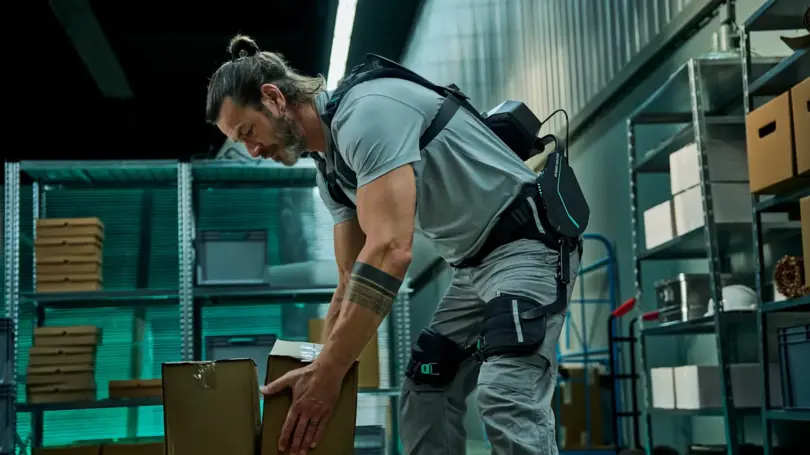
The IX BACK VOLTON exoskeleton, first introduced in 2025, is designed to support lifting activities in industrial and logistics environments. The system uses sensors and adaptive motor support to assist movement in real time.
In addition, the Volton XP Companion app integrates sensor data with ergonomic analysis, providing insights into activity patterns and usage trends. This allows companies to measure the impact of exoskeleton deployment and guide workplace improvements.
AI-based tools for workplace analysis
SUITX by Ottobock is also developing the AIRGO XP tool in collaboration with MotionMiners GmbH. The system analyses movement patterns and posture to detect ergonomic strain and generate targeted recommendations.
Meanwhile, the platform supports the development of training programmes for employees and provides decision-making data for operational management.
Research highlights impact on physical strain
Ongoing research, including a long-term study conducted with Airbus and the German Social Accident Insurance (DGUV), has evaluated the impact of exoskeleton use in real working environments.
The findings indicate reduced strain in the neck and shoulder region during overhead work, alongside measurable improvements in efficiency. These results support the role of exoskeletons in occupational health strategies.
Understanding smart exoskeletons and digital ergonomics
Smart exoskeletons are wearable systems designed to support human movement and reduce musculoskeletal strain. When integrated with digital ergonomics platforms, these systems can provide continuous data on posture, motion and workload.
Importantly, AI-driven analysis enables organisations to move from reactive to proactive workplace health management. By identifying risks early, companies can implement targeted interventions to improve safety and productivity.
As industrial environments become increasingly data-driven, the combination of wearable technology and analytics is expected to play a growing role in workforce health and operational efficiency.
Explore more in Medical Devices & Diagnostics.