
Agilent cancer research solutions were presented at AACR 2026, where Agilent Technologies outlined new tools, collaborations and workflows supporting oncology research and diagnostics. The developments reflect increasing demand for integrated approaches across the cancer research continuum.
Integrated workflows for cancer research
Agilent Technologies is showcasing a range of solutions at the American Association for Cancer Research (AACR) Annual Meeting. These include technologies designed to connect discovery research, translational science and companion diagnostics development.
As a result, the company is positioning integrated workflows as a response to growing complexity in oncology research. This approach aims to support researchers working across multiple stages of drug development and clinical investigation.
Advances in cell imaging and analysis
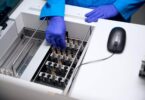
Among the featured technologies is the BioTek Cytation 9 cell imaging multimode reader. The system combines automated microscopy with conventional microplate reading within a single platform.
In addition, the Cytation 9 supports both live-cell and endpoint assays. This allows researchers to conduct a wide range of cell-based studies within a unified workflow.
AI-enabled software and sequencing collaboration
Agilent is also previewing an AI-enabled software enhancement for the xCELLigence RTCA eSight system. The update is intended to support more consistent and reproducible data analysis in label-free live-cell imaging.
Meanwhile, the company highlighted its collaboration with Oxford Nanopore Technologies. The partnership demonstrates compatibility between Agilent SureSelect target enrichment chemistry and long-read sequencing platforms.
This integration enables researchers to combine hybrid-capture enrichment with real-time sequencing. Applications include structural variant analysis, methylation profiling and targeted genomics.
Industry collaboration and scientific engagement
At AACR 2026, Agilent is also supporting scientific exchange through presentations and events. A session on targeted methylation sequencing will explore long-read sequencing approaches in oncology research.
In addition, the company continues its collaboration with the American Association for Cancer Research. This includes support for early-career researchers through fundraising initiatives and scholar programmes.
Further information is available via the Agilent Technologies website.
Understanding integrated cancer research technologies
Integrated cancer research technologies combine multiple analytical approaches into unified workflows. These systems bring together imaging, sequencing and data analysis tools to streamline research processes.
Importantly, this approach allows researchers to generate more comprehensive datasets across different stages of oncology research. By connecting discovery and clinical applications, integrated platforms support more efficient translation of findings into diagnostics and therapies.
As cancer research becomes increasingly data-intensive, technologies that improve interoperability and workflow efficiency are becoming more widely adopted. This trend is expected to continue as research organisations seek to accelerate development timelines and improve data quality.
Explore more in Laboratory Science & Tools.